
Kevin Warsh and the Future of the Federal Reserve: Stability or Strategic Reset?
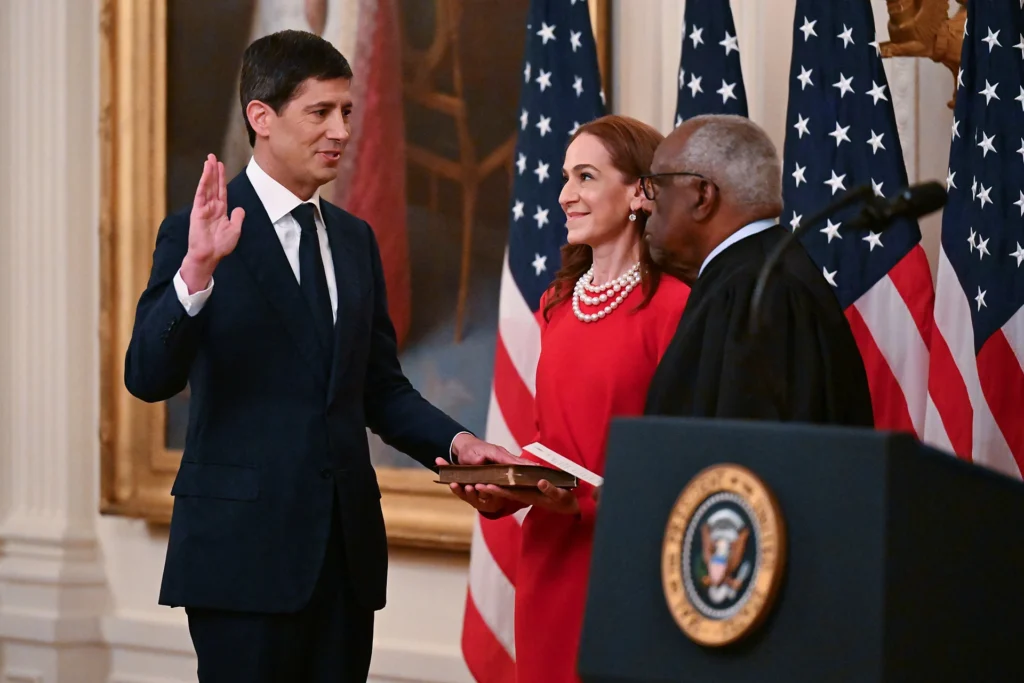
The confirmation of Kevin Warsh as Chair of the Federal Reserve has triggered one of the most divided debates in modern monetary policy. To some investors, Warsh represents exactly what the U.S. economy needs after years of aggressive tightening, slowing growth, and mounting financial stress. To others, he represents a dangerous shift toward a Federal Reserve that could become too focused on supporting markets instead of protecting long-term economic stability. Both sides have strong arguments. And both sides are looking at the same economic reality through completely different lenses. The core issue is simple: Should the Federal Reserve prioritize maximum inflation discipline even if it slows the economy — or should it become more adaptive to financial stress, investment cycles, and modern market dynamics Supporters of Warsh believe the Federal Reserve kept monetary policy restrictive for too long after the inflation shock of 2021–2022. 

They argue that while inflation needed to be controlled, the side effects of aggressive rate hikes became increasingly visible across the economy:
 
  • higher borrowing costs,
  • pressure on housing markets,
  • slowing startup activity,
  • reduced venture capital investment,
  • stress within regional banking systems,
  • weaker liquidity conditions.
From this perspective, the economy has entered a different phase. Inflation has cooled significantly from its 9.1% peak in June 2022, but restrictive policy remains in place. Warsh supporters believe continuing to hold rates excessively high risks creating unnecessary economic damage. They also argue that Warsh understands financial markets better than many traditional policymakers. Unlike purely academic central bankers, Warsh spent years operating close to both Wall Street and the Federal Reserve system. During the 2008 financial crisis, he was directly involved in managing one of the most dangerous periods in modern economic history.
 

Supporters view this experience as critical in today’s environment, where markets face multiple structural risks simultaneously:

  • rising government debt,
  • geopolitical fragmentation,
  • slowing global growth,
  • AI-driven economic disruption,
  • growing stress inside credit markets.
To them, the Federal Reserve cannot operate with a rigid “higher for longer” mindset indefinitely. They believe Warsh could bring a more flexible and market-aware approach that stabilizes financial conditions while supporting innovation and long-term investment.
 

This is why many investors expect sectors tied to:

  • artificial intelligence,
  • semiconductors,
  • cloud infrastructure,
  • venture capital,
  • Bitcoin,
  • high-growth technology
to benefit under a more adaptive Federal Reserve leadership. But critics see an entirely different danger. They argue that markets are celebrating Warsh for the wrong reasons. The Federal Reserve’s primary responsibility is not to keep stocks rising. Its mission is to maintain price stability, preserve confidence in the U.S. dollar, and prevent long-term systemic instability. Critics warn that becoming too “market friendly” too early could repeat some of the most damaging mistakes in central banking history. The concern is not theoretical. The United States already experienced what happens when monetary policy remains too loose for too long. After years of ultra-low interest rates and massive liquidity injections following the COVID-19 crisis, inflation surged to levels not seen in decades. The Federal Reserve was then forced into one of the fastest tightening cycles in modern history.
 

The consequences were brutal:

  • growth stocks collapsed,
  • trillions disappeared from technology valuations,
  • real estate activity slowed sharply,
  • financing conditions tightened aggressively,
  • speculative markets crashed.
Critics argue this was not caused by excessive tightening itself — but by years of delayed response to inflation risks. For them, the biggest danger is credibility. History provides a powerful warning through the 1970s under former Fed Chair Arthur Burns. Burns faced political pressure to avoid aggressive tightening despite rising inflation. The Federal Reserve hesitated, inflation expectations became deeply embedded, and the United States entered a prolonged stagflation period. Eventually, Paul Volcker was forced to raise interest rates close to 20% to restore credibility — triggering severe economic pain but ultimately stabilizing the system. Critics fear that if the Federal Reserve under Warsh appears too responsive to political pressure or market demands for lower rates, the institution’s independence could weaken. That risk extends far beyond equities.
 

The U.S. dollar remains the world’s reserve currency. Federal Reserve policy directly impacts:

  • global capital flows,
  • sovereign debt markets,
  • emerging economies,
  • commodity pricing,
  • international liquidity conditions.
A Federal Reserve perceived as soft on inflation could weaken long-term confidence in the dollar and increase volatility across global markets.

Yet supporters reject comparisons to the 1970s entirely.

They argue today’s economy is fundamentally different:

  • technology increases productivity,
  • automation reduces labor pressure,
  • supply chains are more globalized,
  • data-driven policy tools are more advanced,
  • financial systems react faster to economic shifts.
From their perspective, flexibility does not equal recklessness. Instead, they believe the Federal Reserve must evolve alongside the modern economy rather than relying exclusively on old inflation frameworks built for a different era. At the center of this debate is one uncomfortable reality: Modern central banking no longer operates in isolation from financial markets.
Every Federal Reserve decision now instantly affects:
 
  • equities,
  • bonds,
  • crypto,
  • housing,
  • private capital,
  • global currencies.

Supporters see Warsh as someone who understands this interconnected system. Critics see that same market awareness as the beginning of dangerous monetary softness. The truth is that Kevin Warsh may ultimately become one of the most consequential Federal Reserve Chairs in decades precisely because he sits between these two competing visions. One side believes stricter monetary discipline protects long-term stability. The other believes excessive rigidity risks suffocating economic growth and innovation during a transformational technological era. The market is not simply debating one man. It is debating what the Federal Reserve itself should become in the next decade. A fortress against inflation at all costs. Or a more adaptive institution designed for a faster, more fragile, and more interconnected global economy. The answer will shape not only interest rates — but the future direction of global markets themselves.

Black Intus / Editorial
News & Analysis
Scroll to Top