
Xi Cornered Trump: How Beijing Walked Away From the Washington Summit With Everything It Wanted
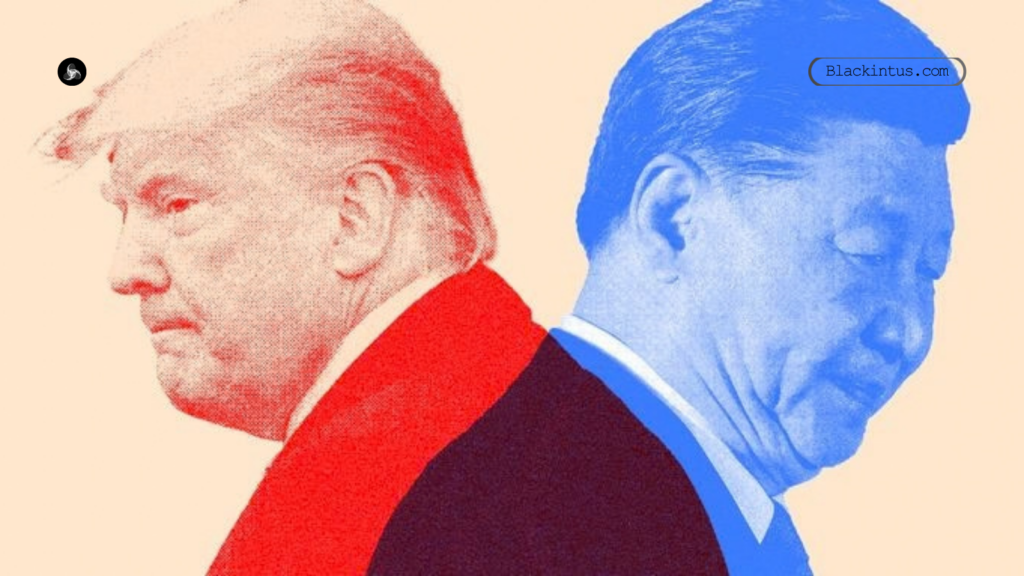
On September 24, 2026, presidents Trump and Xi met for roughly two hours — a strikingly short session for talks widely billed in advance as historic. The brevity itself was telling: with translation eating into the clock, there was little room for real negotiation. Most of what was said had evidently been pre-agreed. Yet the meeting’s substance, and the imbalance it exposed, may prove one of the more consequential moments of Trump’s second term.
A Tale of Two Media Coverages
The optics alone told the story. American coverage of Xi’s arrival was almost nonexistent — not because the summit lacked importance, but because U.S. networks were consumed by a self-inflicted scandal: the White House had barred CNN, Politico and MSNBC from press events, prompting a boycott even from Fox News. A federal judge ordered the outlets reinstated for the morning ceremony, only for the ban to resurface at the evening state dinner, with contempt proceedings now looming for senior officials including Chief of Staff Susie Wiles.
China’s coverage was the opposite: real-time, triumphant, and detailed down to the diplomatic choreography — who shook whose hand, who patted whose back. Chinese outlets read the encounter as a changing of the guard, and the U.S. State Department, remarkably, had issued no formal readout at all more than 24 hours after the talks ended — a sign, per Shvets, of an institution hollowed out by years of “deep state” purges.
The Thucydides Trap, Made Explicit
Xi invoked the “Thucydides Trap” — the historical pattern in which a rising power’s challenge to a ruling hegemon tends to end in war — for the second time in dealings with Trump. Some analysts read this as a pointed, near-public signal: Beijing considers itself the rising power, and Washington the incumbent whose time is running out. Of 16 historical cases where a rising power challenged a hegemon, most ended in conflict. Xi’s stated goal was different: lock in stability long enough for China’s industrial and trade advantages to finish the job without a war — stability that conspicuously does not extend to conflicts, like the one in the Middle East, that drain U.S. resources and strengthen Beijing’s hand.
What Went Unaddressed
Several issues Trump might have been expected to press were simply absent:
- Ukraine. Despite Zelensky’s request that Trump ask Xi to lean on Moscow, the topic drew a single bland line in China’s official readout: the two leaders “exchanged views” on the Ukraine crisis, the Middle East, and the Korean peninsula. No mediation offer, no pressure pledge.
- Iran / Middle East mediation. Beijing’s oil-security interest in ending the standoff in the Persian Gulf made a mediation offer plausible — and it never came. China’s language stayed deliberately vague: a general nod to “international law” and hopes for de-escalation, nothing more.
The Rare-Earths Leverage That Went Unmentioned
Rare earths are the choke chain currently around the U.S. defense-industrial base. Despite deals with Ukraine, new supply agreements in Argentina, and the recent Greenland minerals pact, American experts estimate the U.S. will remain critically dependent on China for rare earths until roughly 2035 — the mining equipment, refining capacity and magnet manufacturing are concentrated in China (and, for magnets, Japan) and cannot be replicated quickly. Tellingly, China’s official summit readout never mentioned rare earths at all — Beijing doesn’t need to threaten what it already controls.
AI: No Meeting of the Minds
Xi called artificial intelligence a potential “terrible weapon” requiring both domestic and international regulation. Trump, shaped by an inner circle of AI-industry figures who back deregulation in exchange for political support, is betting that an AI breakthrough will hand the U.S. total supremacy — “whoever wins AI wins everything.” Shvets draws a pointed historical parallel: Washington’s brief nuclear monopoly after 1945 lasted only four years before Moscow tested its own bomb. A comparable surprise from Beijing, he argues, is entirely plausible — and recent breaches of NSA and FBI systems suggest the security assumptions underpinning U.S. AI confidence are already cracking. Notably, a growing internal faction (reportedly including figures at Anthropic and elsewhere) is pushing for AI regulation even as adviser David Sacks holds the anti-regulation line that currently prevails.
Taiwan: A Quiet Concession
Beijing pushed for one specific word change: an explicit U.S. statement opposing Taiwanese independence, not merely “non-support.” Trump held that line rhetorically — but has quietly frozen roughly $1.4 billion in routine Taiwan military assistance for a second month, calling it a bargaining chip. In practice, Washington’s traditional treaty commitments to Taiwan are eroding without the formal words changing, a shift that has drawn bipartisan anger in Congress.
Iran and the Gulf: China’s Proxy Leverage
Beijing’s approach to the Middle East reveals a longer game: it wants the Strait of Hormuz open, but is content for Iran to control transit fees there as a “war trophy,” mirroring Trump’s own framing of Venezuelan oil. There is also talk of the U.S. drawing down its 19 regional bases toward a minimal footprint (Jordan, possibly Israel), with China emerging as the dominant regional actor operating through Iran — a strategic relationship Beijing has cultivated since at least 1991. For Trump personally, a prolonged Gulf standoff running into the November midterms is a serious domestic threat: with gasoline near $6.50/gallon and Republicans trailing in Senate races in three states including Texas, a Senate flip would make impeachment proceedings from a Democratic House far more consequential than the two prior, symbolic attempts.
Moscow’s Read: The Trump Bet Is Off
Shvets sees clear signs the Kremlin has concluded Trump is no longer a reliable patron — visible in the fact that pro-Kremlin commentators (Tucker Carlson prominently among them) have begun openly attacking Trump, something they would not do if he still mattered to Moscow’s interests. At the UN General Assembly, Western leaders publicly declared Putin is losing the war, even as Lavrov rejected an energy-related truce and Putin issued a stark warning that further war with Europe would leave “no one left to negotiate with.”
The Danish Intelligence Warning
The most significant document Shvets highlights is a threat assessment from the Danish Defence Intelligence Service (DDIS), released two days before the summit. Its core findings:
- Russia’s hybrid war against NATO — sabotage, destructive cyberattacks, drone incursions — is intensifying and growing more willing to accept risk; Russian drones and, in some cases, missiles have already struck NATO states bordering Ukraine.
- Russia faces greater pressure than at any prior point in the war: deep Ukrainian strikes are causing escalating damage inside Russia, gains on the ground remain minor relative to losses, and the Russian economy is nearing a serious crisis.
- Russia has no realistic prospect of a major breakthrough against Ukraine within six months, and Putin is very unlikely to compromise on his war’s core aims.
- Europe’s growing, U.S.-independent military capability will pose a serious threat to Russia by 2030 — creating a closing “window,” 2026–2030, in which Putin may conclude the risk of radical action is worth taking before that window shuts. Shvets draws an explicit Hitler parallel: a leader who escalates because standing still looks equally dangerous.
DDIS lays out an escalation ladder:
- Intensified hybrid war — more frequent, more damaging cyberattacks on critical infrastructure and sabotage operations carrying “high risk to human life,” a marked escalation from current activity.
- Limited military action against one or more NATO states bordering Russia — assessed as a small but growing risk, potentially including false-flag strikes (blamed on Ukrainian-made drones) or unmarked troop deployments (“little green men”), aimed at diverting European resources from Ukraine and testing whether Article 5 holds.
- Full-scale invasion of a NATO state — assessed as unlikely, requiring at least six months of visible preparation, with DDIS putting the probability at roughly 10%.
DDIS Director Thomas Ahrenkiel clarified that “limited military action” could mean anything from long-range missile or drone strikes on NATO infrastructure supporting Ukraine to a limited, deniable incursion of armed personnel — not full invasion, but a deliberate probe of the alliance’s collective-response threshold.
Market Implications
For traders and investors, the summit and the DDIS assessment point in the same direction: hedge for a longer, messier geopolitical cycle, not a resolution.

- Gold. Safe-haven demand has structural support from three angles at once: a closing Russia–NATO escalation window (2026–2030), unresolved Taiwan Strait tension, and a wobbling U.S. domestic political outlook into the midterms. Pullbacks look more like entry points than trend reversals.
- USD / DXY. Impeachment risk if Democrats flip the Senate, a hollowed-out State Department, and a president visibly conceding ground to Beijing are dollar-negative narratives even before any policy materializes. Watch Texas and the other two contested Senate races as a leading indicator.
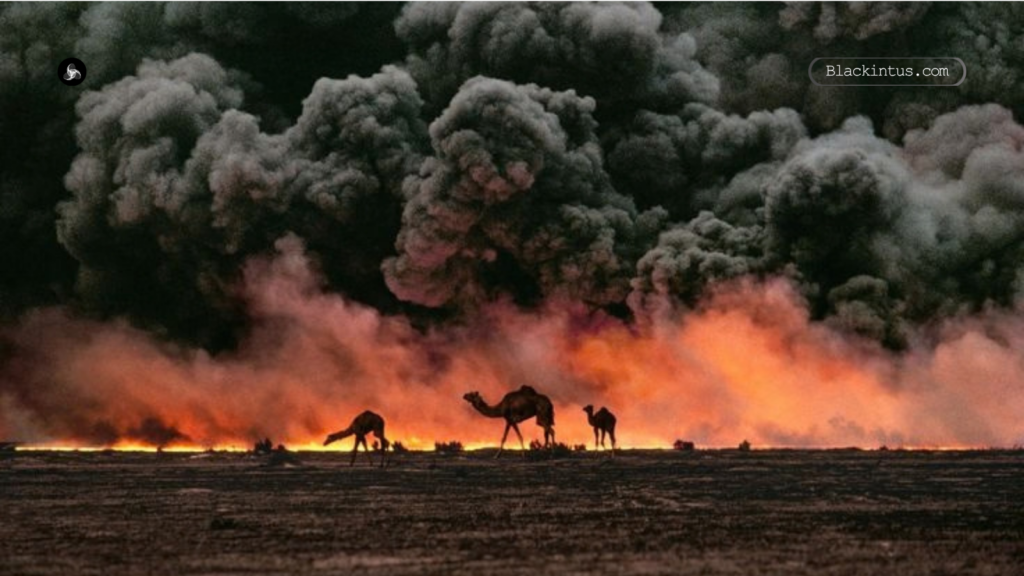
- Oil. Gulf tensions remain unresolved and China has no incentive to broker a quick fix while elevated prices squeeze U.S. consumers and Trump’s approval. A reopened, Iran-taxed Hormuz Strait is a persistent tail risk, not a settled outcome — expect volatility rather than a clean directional move.
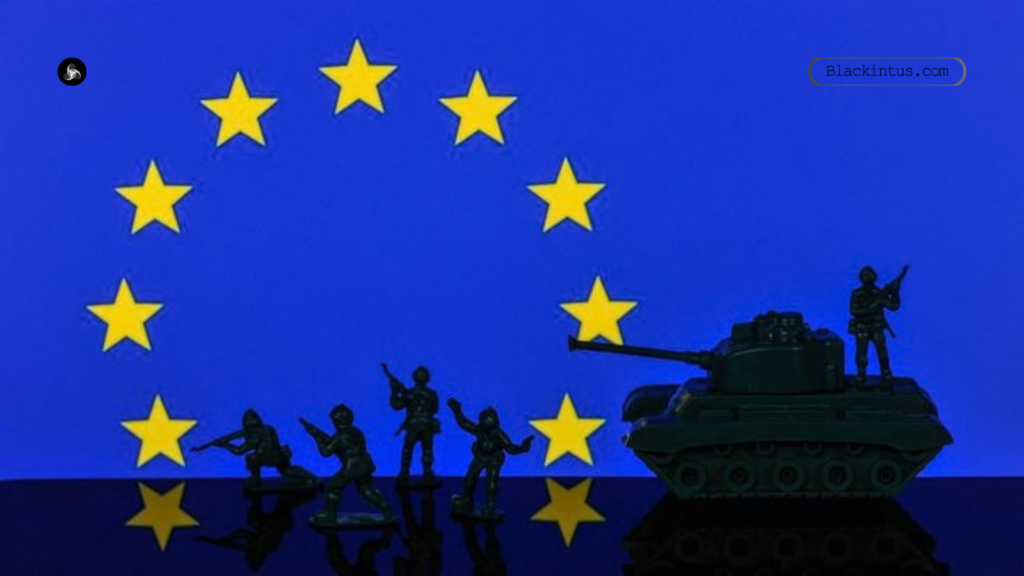
- European defense equities. DDIS’s own framing — that Europe’s independent military buildup becomes a real threat to Russia by 2030 — is itself the bull case for the sector: expect continued multi-year budget commitments regardless of any near-term ceasefire headlines.
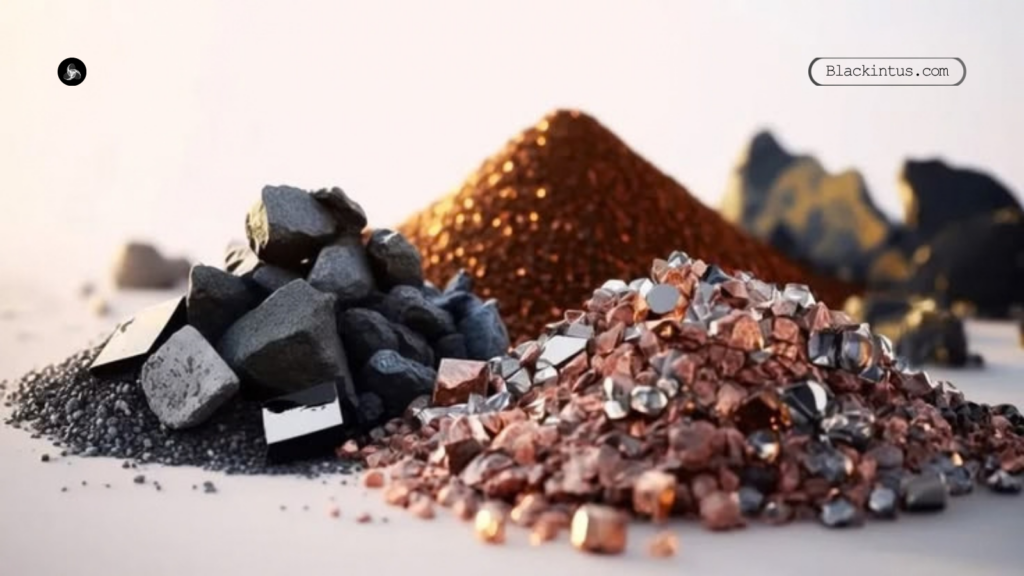
- Rare earths / critical minerals miners. The U.S. dependency on Chinese rare earths through ~2035 is a multi-year structural story, not a trade to fade on any single Greenland- or Argentina-deal headline. Ex-China supply chain plays (mining, refining, magnet manufacturing) remain a multi-year theme rather than a one-off catalyst trade.
None of this is investment advice — treat it as a map of the macro cross-currents, not a set of positions.
Bottom Line
China secured exactly what it came for: strategic stability to keep pressing its advantage in the Thucydides Trap, continued (if quiet) leverage over Taiwan, and a Middle East arrangement that keeps the U.S. entangled and dependent on Chinese goodwill on rare earths. Trump’s remaining card is a hoped-for AI breakthrough delivering “total victory” — a bet historical precedent suggests is fragile. Meanwhile, Moscow appears to be concluding that its Washington bet has expired, and Western intelligence assessments now treat 2026–2030 as a live window for escalation against NATO’s eastern flank. For Kyiv and Europe, the read is double-edged: Russia is visibly under strain, but a cornered adversary with a closing window is not necessarily a cautious one.
Disclosure: This report summarizes and analyzes third-party commentary and a publicly discussed intelligence assessment. It reflects the source analyst’s interpretation, not verified Blackintus reporting, and is provided for informational purposes — not investment or policy advice.