
US, Israel and Iran: Strategic Confrontation in a Fragmenting Global Order
I. Strategic Context
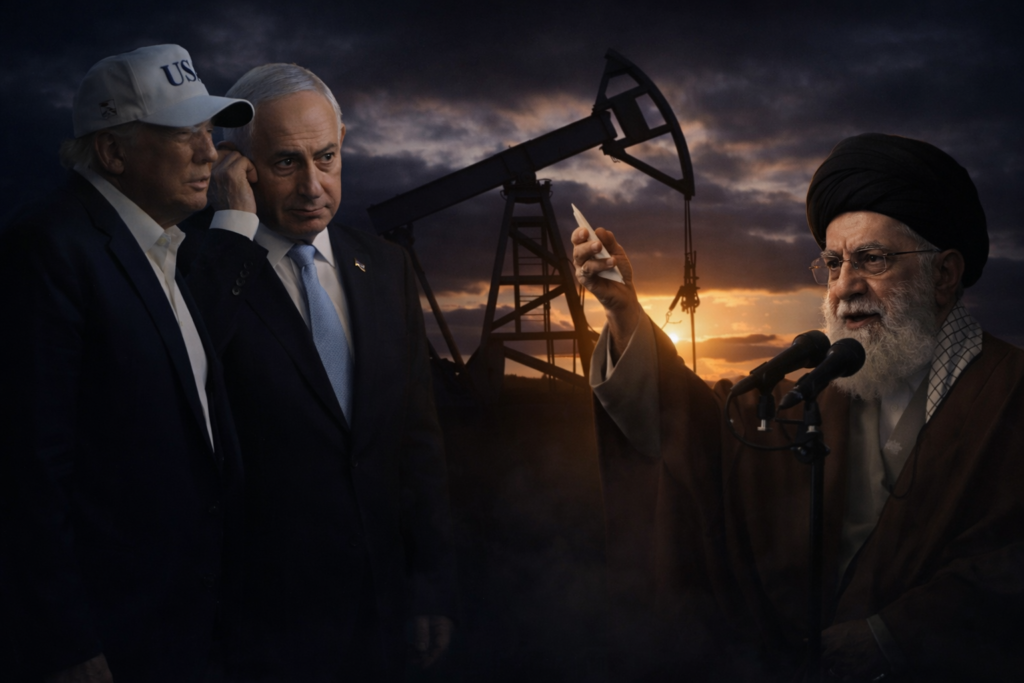
Tensions between the United States, Israel and Iran represent one of the most persistent fault lines in Middle Eastern geopolitics. At the center of the dispute lies Iran’s nuclear program, regional influence networks, and the broader question of power balance in the Gulf and Levant.
Washington’s official position has long been clear: preventing Iran from acquiring nuclear weapons remains a core national security objective. Israel views the issue as existential. Israeli leadership, including Prime Minister Benjamin Netanyahu, has repeatedly argued that Iran’s nuclear threshold capability poses a direct strategic threat.
Iran, for its part, maintains that its nuclear activities are civilian in nature. Supreme Leader Ali Khamenei has publicly referenced a religious ruling opposing nuclear weapons. However, Western intelligence agencies focus less on declared intent and more on technical capability, particularly enrichment levels and breakout timelines.
Beyond the nuclear file, the confrontation encompasses regional proxy dynamics, maritime security in the Strait of Hormuz, and Iran’s relationships with Russia and China.
II. Economic Implications: Oil, Markets, and the Dollar
1. Oil Markets
Iran sits near one of the world’s most strategically critical energy corridors. Roughly 20% of global oil trade flows through the Strait of Hormuz.
Escalation scenarios could affect:
Brent crude volatility
Gulf shipping insurance premiums
OPEC production strategy
U.S. shale output incentives
Short-term military escalation typically results in:
Immediate oil price spikes
Risk premium expansion
Speculative inflows into energy futures
However, sustained price increases depend on whether physical supply is materially disrupted.
2. Global Equity Markets
Markets typically respond in three phases:
Phase 1 – Shock Reaction
Risk-off sentiment
Equity sell-offs
VIX spike
Phase 2 – Energy Rotation
Outperformance of oil majors
Defense sector rally
Commodity-linked currencies strengthening
Phase 3 – Macro Repricing
Inflation expectations adjust
Central bank policy recalibrations
Bond yields react to fiscal expansion risks
U.S. defense contractors and major energy firms tend to benefit in limited-conflict scenarios. However, prolonged engagement may weigh on broader market multiples.
3. The U.S. Dollar
The dollar historically benefits from geopolitical stress due to safe-haven flows. Yet a prolonged military engagement combined with fiscal expansion could introduce longer-term structural pressures:
Rising deficit financing
Treasury issuance expansion
Potential diversification by emerging markets
The dollar’s trajectory would depend on whether the conflict remains regional or evolves into a multi-theater geopolitical standoff involving Russia or China.
III. Strategic Incentives of Each Actor
United States
Prevent nuclear weaponization
Maintain Gulf security architecture
Protect maritime energy routes
Contain Iranian influence networks
Constraints:
Fiscal cost
Domestic political polarization
Competing global commitments (Asia-Pacific)
Israel
Neutralize perceived existential threat
Dismantle Iranian-aligned regional networks
Preserve military deterrence credibility
Israel’s risk calculus differs from Washington’s due to geographic proximity and security doctrine.
Iran
Preserve regime continuity
Expand regional deterrence
Strengthen partnerships with Russia and China
Leverage asymmetric capabilities
Tehran may prefer calibrated escalation rather than full-scale confrontation.
IV. Geostrategic Scenarios 2026–2030
Scenario 1: Controlled Escalation
Limited strikes
No regime collapse
Oil volatility but no sustained disruption
Proxy tensions continue
Outcome:
Regional instability without structural global realignment.
Probability: Moderate.
Scenario 2: Prolonged Regional War
Direct U.S.–Iran confrontation
Proxy network expansion
Hormuz shipping disruption
Economic effects:
Brent above structural equilibrium
Defense spending surge
Inflationary impulse globally
Geopolitical outcome:
Acceleration of multipolar order; strengthened Russia–China–Iran alignment.
Probability: Low–Moderate but high impact.
Scenario 3: Diplomatic Reset
Renewed nuclear framework
Sanctions recalibration
Controlled Iranian energy re-entry into markets
Economic effects:
Oil supply normalization
Lower geopolitical risk premium
Stabilization of Gulf capital flows
Probability: Low but economically stabilizing.
Scenario 4: Structural Global Shift
If escalation exposes U.S. limits in sustaining multi-front commitments, the period 2026–2030 could accelerate:
Regional power consolidation
Reduced Western strategic dominance
Energy trade fragmentation
Increased yuan-based settlements in energy trade
This would represent not simply a regional war but a turning point in global order architecture.
V. Conclusion
The U.S.–Israel–Iran confrontation is not solely about nuclear enrichment thresholds. It is embedded within a broader transition toward a more fragmented global system.
Markets will respond first through volatility, then through repricing of risk, energy premiums, and fiscal sustainability assumptions.
Whether this episode becomes another contained Middle Eastern flare-up or a catalyst for structural geopolitical transformation depends on three variables:
Duration
Direct U.S. military involvement
External power alignment (Russia and China)
The period 2026–2030 will likely determine whether the global order remains U.S.-anchored or shifts further toward multipolar regional blocs.